When The Wheels Came Off: The Need to Get Back to Workers’ Rights First, Certifying a Union as a Last Resort
The Broken System: How We Lost Our Way
The American labor movement stands at a critical crossroads. For decades, we’ve operated under the assumption that the ultimate victory for workers is union certification—a legal designation that, in theory, grants collective bargaining power. But this focus on certification as the primary goal has led us astray. We’ve created a system where the process of forming a union has become more important than the actual protection of workers’ rights, where the means have overshadowed the ends, and where workers are left vulnerable despite having legal protections on paper.
The wheels didn’t just fall off suddenly—they came loose gradually, through a combination of legal setbacks, strategic missteps, and a fundamental misunderstanding of what truly empowers workers. The result is a labor movement that often finds itself winning battles while losing the war, celebrating union certifications while workers continue to face retaliation, intimidation, and erosion of their fundamental rights.
Section 7 Rights: The Foundation That Should Guide Us
At the heart of American labor law lies Section 7 of the National Labor Relations Act, which guarantees workers “the right to self-organization, to form, join, or assist labor organizations, to bargain collectively through representatives of their own choosing, and to engage in other concerted activities for the purpose of collective bargaining or other mutual aid or protection.” This is the foundation—the bedrock principle that should guide every labor strategy.
Yet somewhere along the way, we lost sight of this fundamental truth. Section 7 rights exist whether or not a union is certified. They belong to every worker, in every workplace, union or not. The right to discuss wages with coworkers, to advocate for better conditions, to act collectively for mutual protection—these are not privileges granted by union certification, but inherent rights protected by law.
The current system treats these rights as secondary to the goal of certification. We’ve created a hierarchy where the legal status of a union matters more than the actual exercise of worker power. This is backwards. Workers’ rights should be the primary focus, with union certification serving as a tool to enhance and protect those rights—not as the end goal itself.
The Certification Trap: Why We’re Losing
The modern labor movement has fallen into what can be called the “certification trap.” This trap operates on several flawed assumptions:
First, it assumes that union certification automatically leads to better conditions for workers. In reality, many certified unions struggle to secure meaningful contracts, face employer stonewalling, or become bureaucratic entities disconnected from their membership. Certification without power is meaningless.
Second, it assumes that the certification process itself is neutral or fair. Nothing could be further from the truth. The National Labor Relations Board election process has become a battlefield where employers wield unprecedented power to intimidate, mislead, and coerce workers. The average time between filing for an election and actually voting has stretched to months, giving employers ample opportunity to run sophisticated anti-union campaigns.
Third, it assumes that workers who fail to achieve certification have no recourse. This is perhaps the most damaging assumption of all. It leaves millions of workers in a limbo where they’re told they’ve “lost” when in reality, they still possess powerful Section 7 rights that can be exercised regardless of certification status.
The certification trap has created a binary view of labor relations: either you’re unionized and protected, or you’re not and you’re vulnerable. This false binary has prevented the labor movement from developing strategies that protect and empower all workers, regardless of their union status.
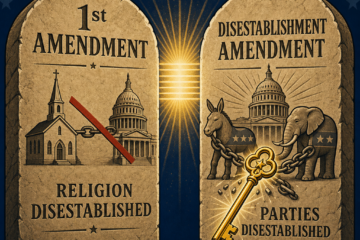
The Political Battlefield: How Both Parties Fail Workers
Perhaps the most damaging consequence of our certification-obsessed system is how it has distorted the political landscape around workers’ rights. Because we’ve framed the entire debate as “pro-union versus anti-union,” we’ve created a political dynamic where the vast majority of American workers—approximately 90% who are not union members—are left without meaningful representation or protection.
The political left, in its focus on protecting and expanding unions, has inadvertently narrowed its concern to the 10% of workers who are unionized or seeking unionization. While well-intentioned, this approach sends a clear message to the 90%: your rights and interests are secondary to the goal of union certification. The left’s advocacy becomes primarily about defending unions rather than defending all workers.
Meanwhile, the political right, in its opposition to unions, has positioned itself against what it perceives as special interests and bureaucratic labor organizations. In doing so, it has abandoned its traditional role as a defender of individual freedom and workplace rights for all workers. The right’s anti-union stance has become so entrenched that it fails to recognize that by opposing unions at all costs, it is actively harming the 90% of workers who simply want to negotiate in good faith with their employers.
This political polarization creates a devastating lose-lose scenario for American workers. The left protects unions, the right fights against unions, and the vast majority of workers are caught in the crossfire. Workers who want better conditions, fair treatment, and a voice in their workplaces find themselves without political allies because their needs don’t fit neatly into the pro-union/anti-union framework.
The tragedy is that both parties claim to support workers, yet both have allowed the union certification debate to blind them to the fundamental rights that all workers possess. The right, in particular, has missed a crucial opportunity: by stepping back from reflexive anti-union opposition and recognizing that protecting workers’ Section 7 rights is consistent with conservative principles of individual freedom and fair play, they could become powerful advocates for the 90% of workers who simply want good-faith negotiation and respect in the workplace.
Imagine a different political landscape: one where the right actively protects the right of all workers to discuss wages, safety concerns, and working conditions without fear of retaliation. One where the left supports workers’ rights regardless of whether they choose union certification. In such a landscape, workers would find themselves negotiating from a position of strength rather than fearfully cowering before employers who know the political system has abandoned their workers.
This political realignment would transform workplace dynamics. Employers would face a united front of political support for workers’ fundamental rights, making retaliation and intimidation far more costly and risky. Workers would feel empowered to exercise their rights, knowing that both political parties supported their basic freedoms to organize and advocate for themselves.
The current political battlefield serves no one except employers who exploit the division. It’s time for both parties to recognize that protecting workers’ rights is not a left or right issue—it’s an American issue. Until we break free from the pro-union versus anti-union framework, the vast majority of American workers will continue to lose out, trapped between two political positions that fail to address their fundamental needs.
The Historical Context: How We Got Here
To understand how we arrived at this broken system, we need to look back at the strategic shifts that brought us here. The post-World War II era saw the labor movement embrace a strategy that prioritized collective bargaining agreements and institutional recognition over direct worker action and rights protection.
The Taft-Hartley Act of 1947 fundamentally altered the landscape of American labor law. While it restricted many union activities, it also created a framework that made union certification the central focus of labor organizing. The Act’s emphasis on exclusive representation and the NLRB election process created a system where legal recognition became paramount.
This was compounded by the Gissel Packing decision of 1969, which established that employers could be required to bargain with unions even without a formal election if the union had demonstrated majority support. While this seemed like a victory for labor, it further entrenched the certification process as the primary goal of organizing.
The result was a gradual shift away from direct action, workplace democracy, and rights protection toward a legalistic, bureaucratic approach that prioritized formal recognition over actual worker power. The labor movement became increasingly dependent on lawyers, consultants, and government agencies rather than on the collective power of workers themselves.
The Cost of Our Current Approach
The consequences of this certification-focused approach have been devastating for American workers. Union density has declined from its peak of 35% in the 1950s to just over 10% today. But more importantly, workers’ ability to exercise their fundamental rights has eroded across the economy.
Employers have become sophisticated in their anti-union tactics, knowing that if they can prevent certification, they can effectively neutralize worker power. They spend hundreds of millions of dollars on union avoidance consultants, captive audience meetings, and sophisticated messaging campaigns. All of this is aimed at one goal: preventing certification.
But here’s the crucial point: even when employers succeed in preventing certification, workers still have Section 7 rights. They can still organize, they can still act collectively, they can still advocate for better conditions. The problem is that we’ve trained workers to believe that without certification, they have no power.
This mindset has created a generation of workers who don’t understand their own rights. They believe they need a union contract to discuss wages with coworkers, to address safety concerns, or to advocate for better scheduling. This is not just wrong—it’s dangerous. It leaves workers vulnerable and dependent on a system that is often stacked against them.
A New Strategy: Rights First, Certification Last
It’s time for a fundamental strategic shift. We need to return to a “rights first” approach that prioritizes the protection and exercise of Section 7 rights above all else. Union certification should be seen as a tool to enhance and protect these rights, not as the ultimate goal.
Under this approach, the focus of organizing would shift from winning elections to building worker power and protecting rights. Organizers would spend less time on card campaigns and more time educating workers about their existing rights. They would focus on creating workplace cultures where workers feel empowered to exercise their rights regardless of union status.
This doesn’t mean abandoning union certification altogether. Rather, it means treating certification as what it should be: a last resort when other methods of protecting workers’ rights have failed. If workers can secure their rights through direct action, collective bargaining without formal certification, or other means, then certification may not be necessary. If employers refuse to respect workers’ rights and create hostile environments, then certification becomes a necessary tool for protection.
Practical Implementation: What This Looks Like
Implementing a rights-first strategy would require significant changes in how we approach organizing and worker protection:
Education and Training: The first priority would be comprehensive education about Section 7 rights. Every worker should understand that they have the right to discuss wages, working conditions, and other employment-related matters with coworkers. They should know that these rights exist whether or not they have a union.
Direct Action Support: Rather than focusing solely on certification campaigns, labor organizations would provide support for direct workplace actions. This could include legal support for workers facing retaliation, assistance with workplace campaigns, and resources for collective action outside the formal union structure.
Workplace Democracy Initiatives: The focus would shift to creating democratic workplace structures that empower workers regardless of union status. This could include worker committees, safety councils, and other mechanisms for collective voice and action.
Legal Defense: A robust legal defense system would protect workers who exercise their Section 7 rights. This would go beyond traditional NLRB cases to include broader legal challenges to employer retaliation and intimidation.
Community Support Networks: Building community support for worker actions would reduce dependence on formal union structures. This could include solidarity actions, public campaigns, and community organizing around workplace issues.
The Role of Certification in a Rights-First System
In a rights-first system, union certification would serve specific, limited purposes:
Protection Against Retaliation: Certification would be sought when workers face systematic retaliation for exercising their rights and need the legal protections that come with formal union status.
Collective Bargaining Power: When employers refuse to bargain in good faith or respect worker voices, certification would provide the legal framework for enforceable collective bargaining.
Workplace Governance: In complex workplaces where formal structures are needed to protect worker interests, certification would provide the institutional framework for ongoing worker representation.
Legal Standing: Certification would be pursued when workers need the legal standing to challenge employer practices or pursue broader workplace reforms.
The key difference is that certification would be a tool, not a goal. It would be pursued strategically, based on the specific needs and circumstances of workers, rather than as a one-size-fits-all solution.
Overcoming Resistance to Change
Shifting to a rights-first approach will face significant resistance from within the labor movement. Many unions have built their entire organizational structure around certification campaigns. Many organizers have spent their careers focused on winning elections.
But the evidence is clear: our current approach is not working. Union density continues to decline, and workers’ rights continue to erode. We cannot afford to continue with a strategy that is failing American workers.
The transition will require retraining organizers, restructuring organizations, and rethinking our fundamental assumptions about labor organizing. It will require investment in new approaches and willingness to experiment with different models of worker protection and empowerment.
The Path Forward
Moving to a rights-first approach will not be easy, but it is necessary. The future of the American labor movement depends on our ability to adapt and evolve. Here are the key steps we need to take:
Immediate Actions:
- Launch comprehensive education campaigns about Section 7 rights
- Develop new organizing models focused on rights protection
- Create legal defense systems for workers exercising their rights
- Build community support networks for workplace actions
Medium-term Goals:
- Restructure labor organizations to prioritize rights protection
- Develop new metrics for success beyond union certification
- Create training programs for rights-first organizing
- Build coalitions with community organizations and other social movements
Long-term Vision:
- Create a labor movement that empowers all workers, not just union members
- Build workplace democracy that extends beyond formal union structures
- Develop a legal framework that truly protects workers’ rights
- Create a society where worker power is recognized and respected regardless of union status
The Urgent Imperative: Why This New Strategy Cannot Wait
The urgency to reach this new rights-first strategy has never been greater. American workers face unprecedented threats on multiple fronts, and our current fragmented approach leaves us dangerously unprepared to fight back. Two forces in particular—immigrant visa holders and artificial intelligence—represent existential challenges to American workers’ job security and economic future.
Employers, driven solely by bottom-line considerations, are increasingly seeking to replace American workers with cheaper alternatives. The H-1B visa program and other guest worker initiatives have created a system where companies can import labor at significantly lower costs, often displacing qualified American workers who are then forced to train their replacements. This isn’t about filling skills gaps—it’s about wage suppression and cost cutting, pure and simple.
Simultaneously, the rapid advancement of artificial intelligence and automation technologies threatens to eliminate entire categories of American jobs. From customer service representatives to truck drivers, from software developers to administrative assistants, AI systems are being developed and deployed specifically to replace human workers with cheaper, more controllable alternatives. Employers see AI not as a tool to augment human productivity, but as a means to eliminate labor costs entirely.
These twin threats create a perfect storm for American workers. On one side, employers can import cheaper foreign labor through visa programs. On the other, they can replace workers with AI systems that work 24/7 without benefits, complaints, or rights. In this environment, the traditional labor movement’s focus on union certification seems almost quaint—a relic of a time when the primary battle was between workers and domestic employers who were at least constrained by some sense of social responsibility.
Today’s employers operate in a globalized, technology-driven marketplace where loyalty to workers is seen as an unnecessary expense. They will replace American workers without hesitation if cheaper alternatives are available. This reality makes the need for a unified, rights-first approach more critical than ever. Only when American workers—union and non-union alike—can exercise their collective power and negotiate from a position of strength can we hope to resist these existential threats.
The current system, where the left protects unions and the right fights against them, leaves American workers completely vulnerable to these replacement strategies. While we’re caught in ideological battles over certification, employers are quietly replacing us with visa holders and AI systems. By the time we realize what’s happening, it will be too late.
This is not an anti-immigrant argument. It’s a pro-American worker argument. It’s about recognizing that our current system fails to protect the very people who built this country and whose labor sustains it. It’s about understanding that without a unified front that protects all workers’ rights, we cannot hope to compete against the dual forces of cheap imported labor and automated replacement.
The time for incremental change has passed. We need a revolutionary shift in how we approach workers’ rights, and we need it now. Every day we delay, more American workers lose their jobs to visa holders or AI systems. Every day we remain trapped in the pro-union versus anti-union framework, employers grow stronger and workers grow weaker.
Breaking the Political Deadlock: A Path Forward
The transformation we need requires more than just a shift in labor movement strategy—it demands a political realignment that puts workers’ rights above partisan battles. The current pro-union versus anti-union framework serves no one except employers who profit from worker division. Breaking this deadlock requires courage from both sides of the political spectrum, especially in the face of these existential threats to American workers.
For the political right, this means recognizing that protecting workers’ Section 7 rights is fundamentally conservative. The right to free speech, the right to associate, the right to negotiate without government interference—these are principles that conservatives should champion. When workers are fired for discussing wages with coworkers, that’s not a union issue, it’s a freedom issue. When employers intimidate workers who organize for better safety conditions, that’s not a labor issue, it’s a basic rights issue.
For the political left, this means broadening its focus beyond union certification to embrace a more inclusive vision of worker empowerment. It means recognizing that the 90% of non-union workers deserve just as much protection and support as the 10% who are unionized. It means understanding that workers’ rights exist independently of union status and deserve protection regardless of whether workers choose formal union representation.
This political realignment would create space for new coalitions and new approaches to worker protection. Imagine business groups joining with labor organizations to support basic workplace rights. Imagine conservative organizations championing legislation that protects workers from retaliation for exercising their Section 7 rights. Imagine progressive groups working with libertarian organizations to create workplace environments where individual freedom and collective action are both respected.
Conclusion: A Call to Action
The wheels have come off the American labor movement, but it’s not too late to put them back on. By returning to a rights-first approach and breaking free from the pro-union versus anti-union political deadlock, we can create a system that truly empowers workers and protects their fundamental freedoms.
This is not about abandoning unions or collective bargaining. It’s about putting workers’ rights where they belong: at the center of everything we do. It’s about recognizing that certification is a tool, not a goal, and that the real measure of success is how well we protect and empower all workers, not just those who choose union representation.
The time for change is now. Workers across America are crying out for protection, for dignity, for respect. They need a labor movement that puts their rights first, that fights for their freedom to organize and act collectively, that sees certification as a last resort rather than a primary goal. They need a political system that supports their fundamental rights rather than using them as pawns in ideological battles.
Let us rebuild the labor movement on the foundation of workers’ rights. Let us create a political consensus that protects every worker’s freedom to negotiate, organize, and advocate for themselves. Let us build a system where every worker knows their rights, feels empowered to exercise them, and has the support they need to do so safely and effectively.
The wheels may have come off, but together, we can put them back on—and this time, we’ll make sure they’re secure enough to carry us forward into a future where workers’ rights are truly protected and respected, where workers negotiate from strength rather than fear, and where the 90% of American workers who simply want good-faith treatment in the workplace finally have the political allies they deserve.
The future of American labor depends not on how many unions we certify, but on how well we protect the rights of every worker, in every workplace, union or not. It depends on our ability to see beyond the pro-union versus anti-union battlefield and recognize that when workers’ rights are protected, everyone wins—workers, businesses, and American society as a whole. Most urgently, it depends on our capacity to unite against the existential threats of replacement by cheaper imported labor and AI systems, before American workers become a permanent underclass in their own country. The choice is ours: unite around workers’ rights now, or watch as employers replace us piece by piece while we fight among ourselves over certification battles that become increasingly irrelevant in a world without American jobs.